Okanagan College
Reimagining program discovery through a modular CMS template system
Background
Okanagan College is a post-secondary institution with approx. 15000-20000 students each year.
Role
UX/UI Designer
Team
2 UX/UI Designers
1 Product Manager
2 Developers
Timeline
Feb 2025 - Mar. 2025
May 2025 - Present
Impact
Optimized 200+ program pages, created 3 new features to improve program discovery, made a new design system from the ground up.
PROBLEM
There's traffic but prospective students are not converting
Program pages are a key turning point in converting prospective students into current students.
While organic website traffic, ad-driven traffic, and education advisor tickets are high, conversion rates remained low.

RESEARCH
Validating a systemic problem
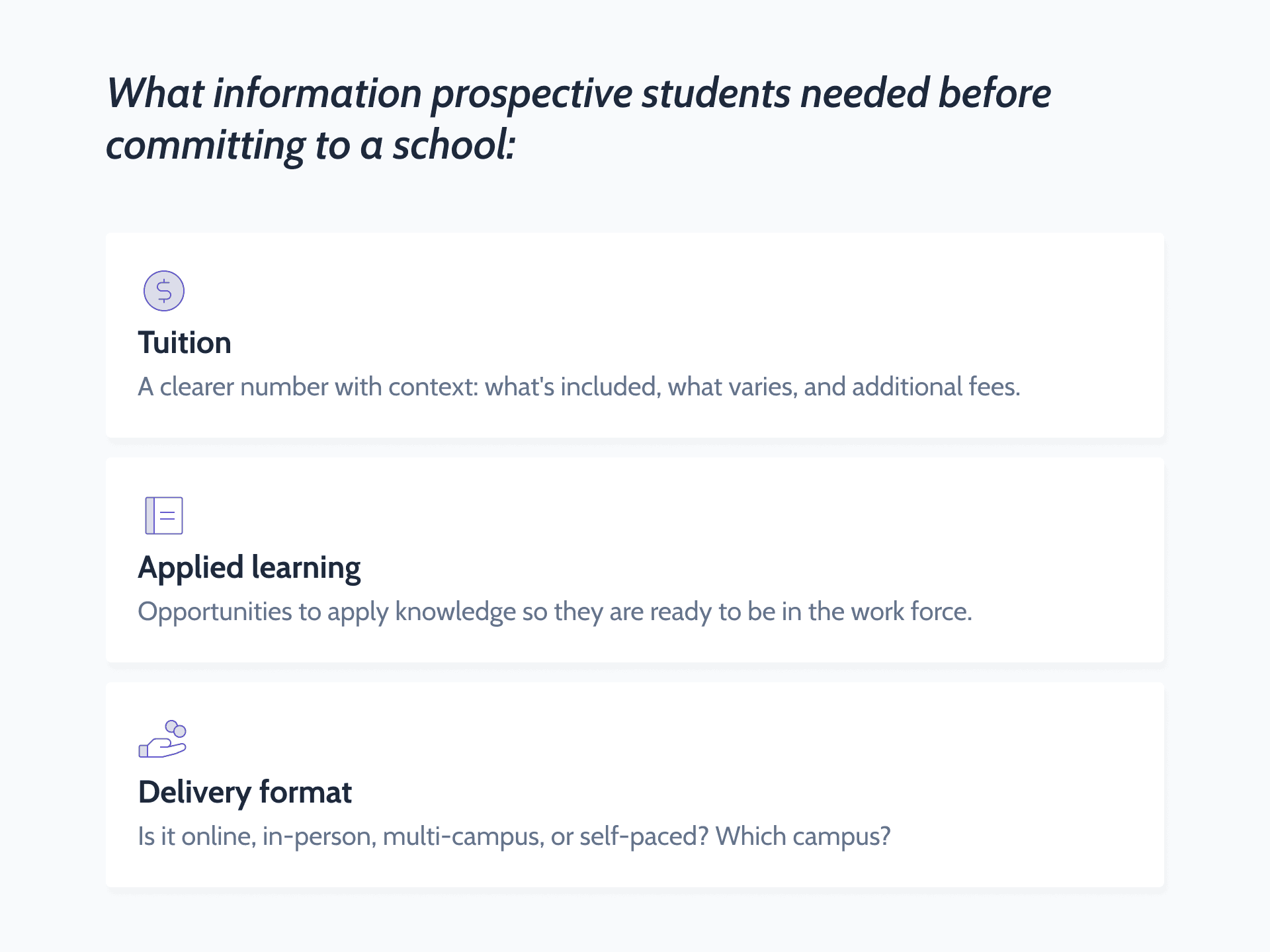
We ran a survey with 800+ users (n = 820) and interviewed prospective students and advisors to identify pain points and understand common questions and concerns. The same themes came up in conversation:
CONTENT AUDIT
Putting ourselves in the users' shoes
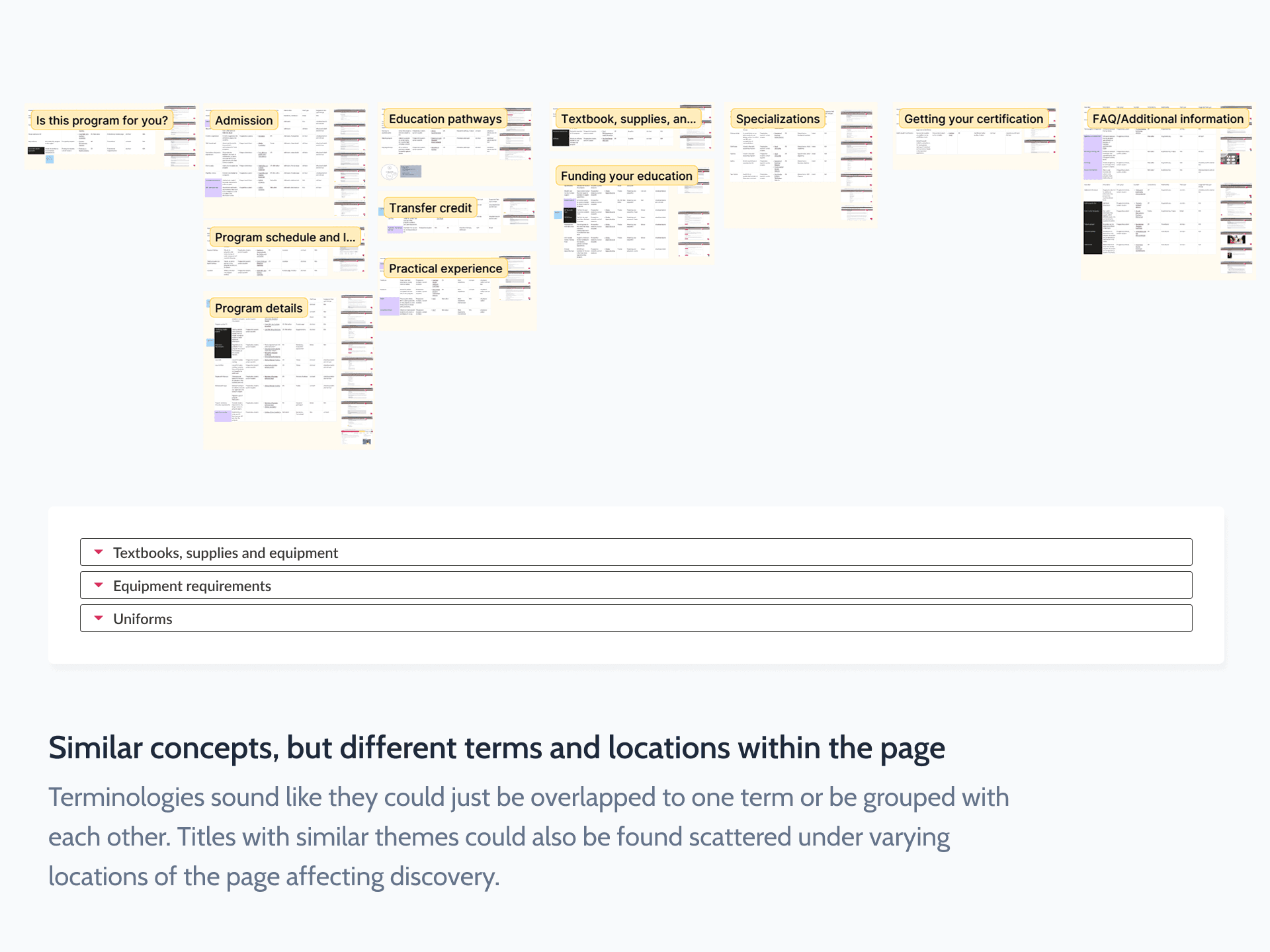
There wasn't a strong consistency in information structure that a prospective student could navigate from. We mapped out program page content based on user group, category, source, and backend toggle type.
THE ACTUAL PROBLEM
How can we improve information implementation so prospective students can easily discover programs?
What the organization sees:
Poor prospective student conversion.
A need to minimize student advising overload and a need for a modern visual refresh.
What's shown by research and data:
Inconsistent data and information implementations affecting site use, maintenance, and scalability.
A need to show what users are looking for.
SIMPLIFYING FOR SCALE
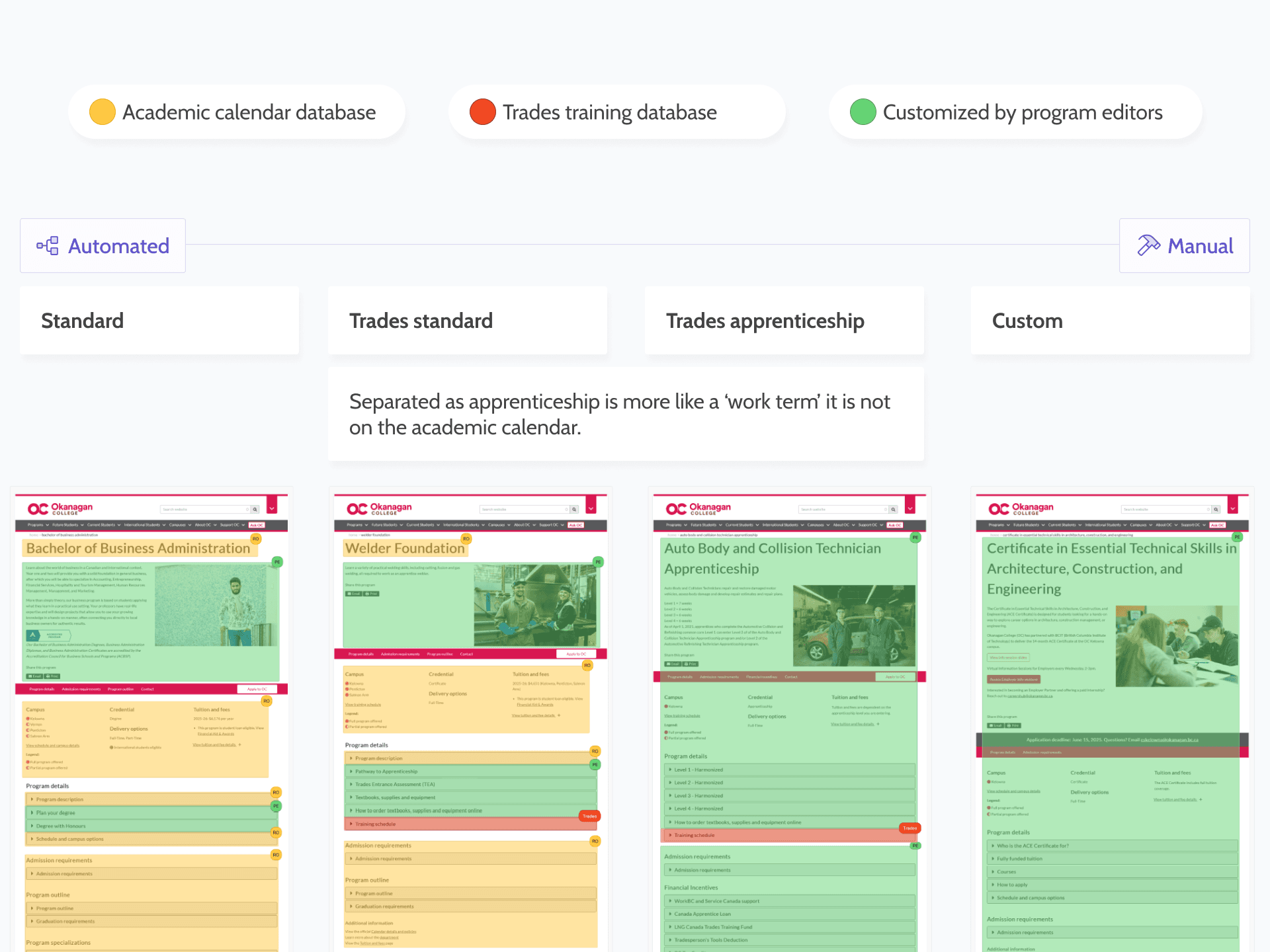
The 4 program page CMS template types
We also separated and organized the program page template types based on usage. Diversifying the program page CMS template types based on backend use-case will lessen bloat options during the editing process while keeping information clear and consistent for prospective students.
HIDDEN CHALLENGES
Things were supposed to end around this stage :0
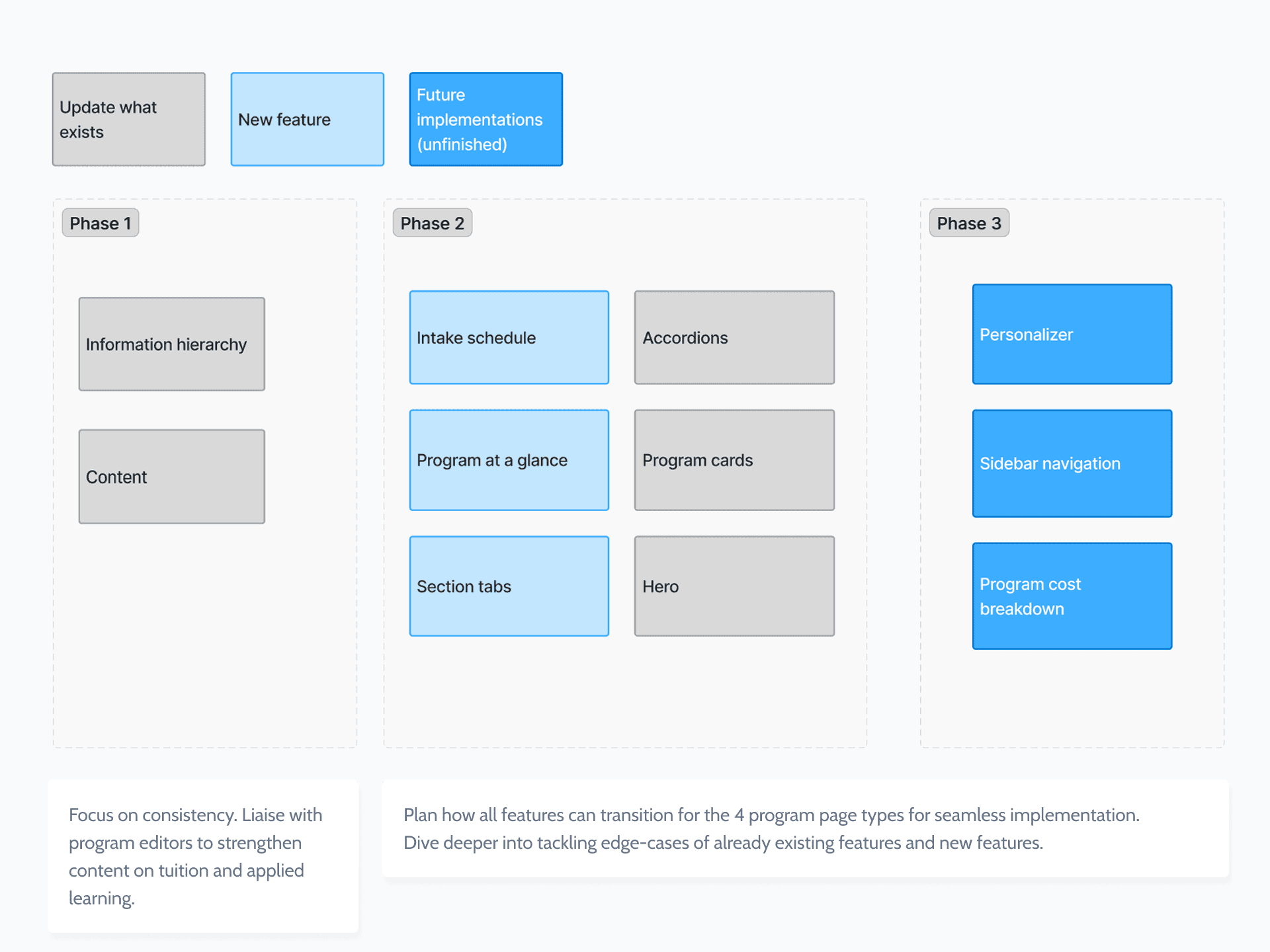
This project initially started as a three-month contract with an unclear chance of continuity. The new designs were planned in phases so that something with long-term impact could land despite uncertain circumstances.
RECAP
Before the big change
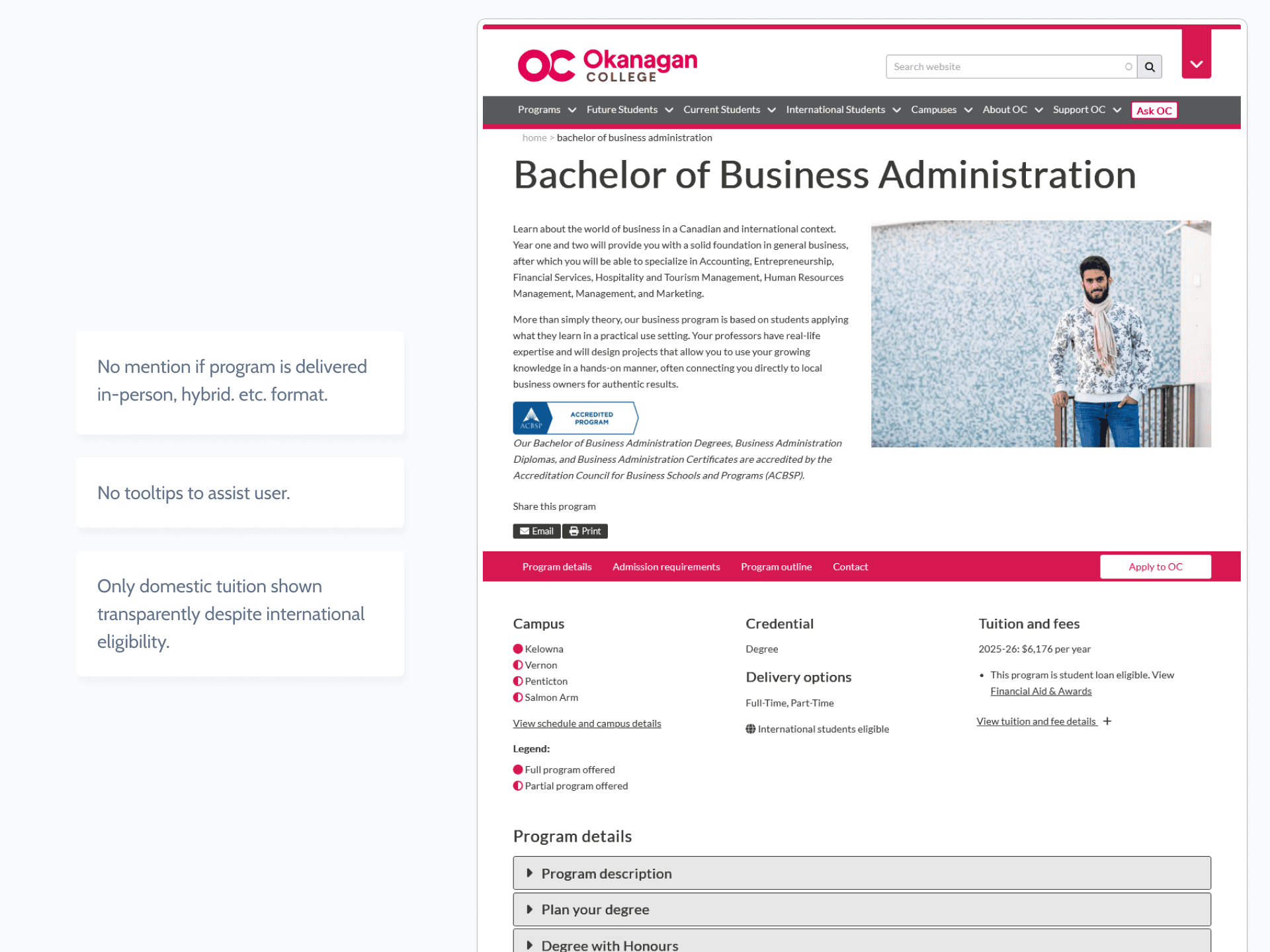
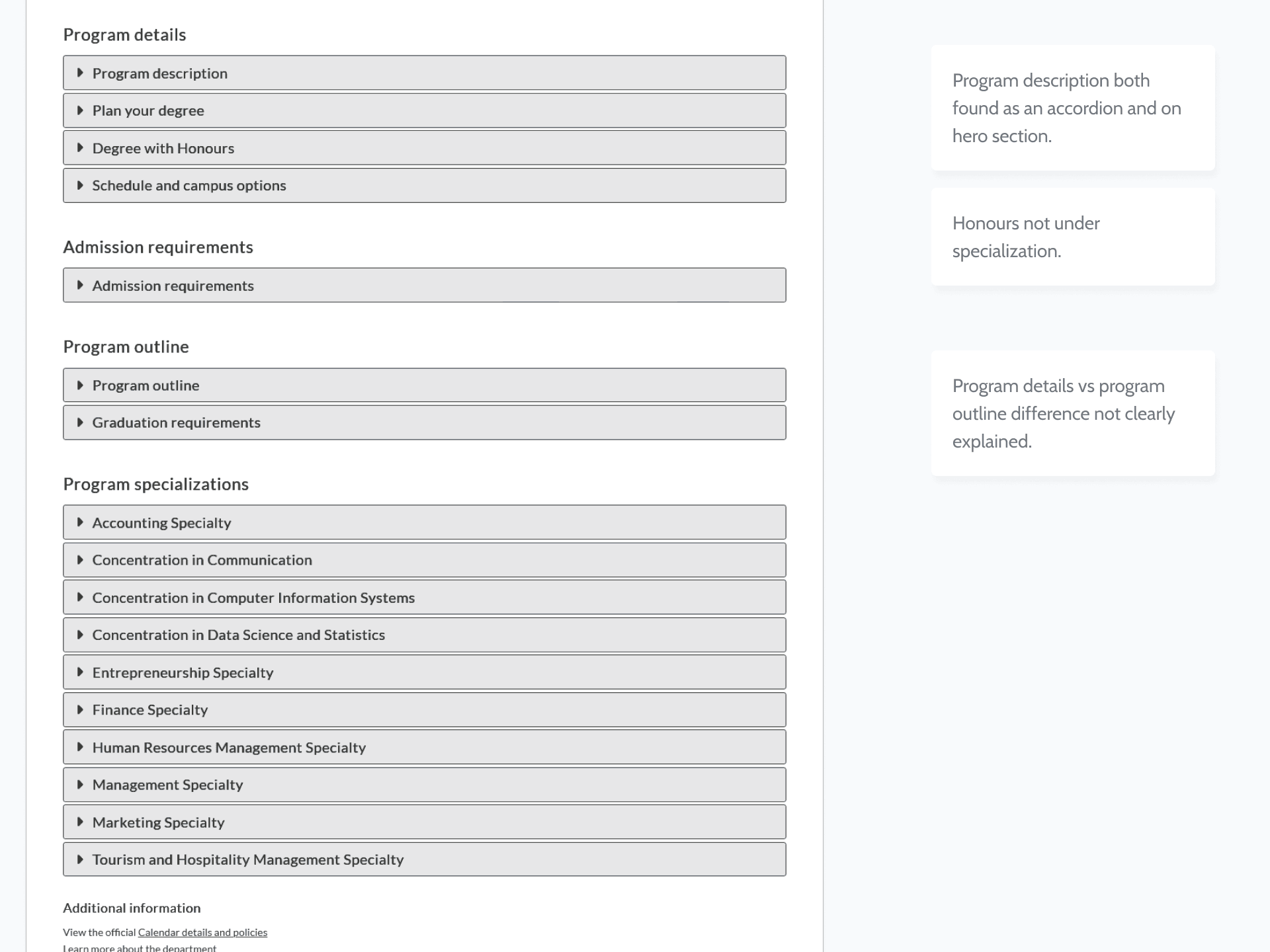
This is how program pages looked like and are structured before the changes.
SOLUTION
A program page designed to be the one source of truth
Section tab:
Groups related content into named, navigable sections. Each tab supports text, accordion groups, or tables.
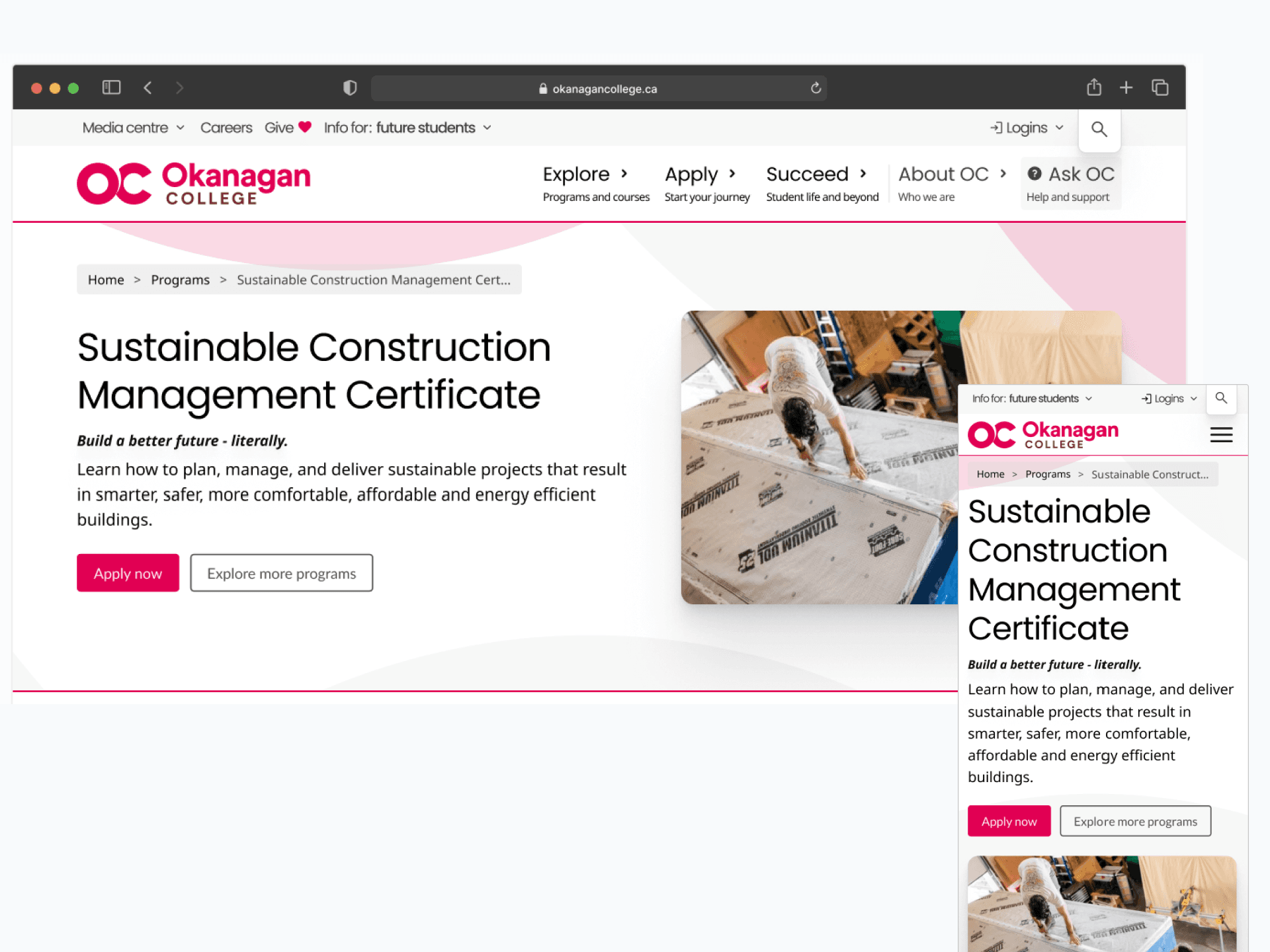
Hero:
Character limits added to enforce a consistent layout regardless of content length. CTA added by program introduction.
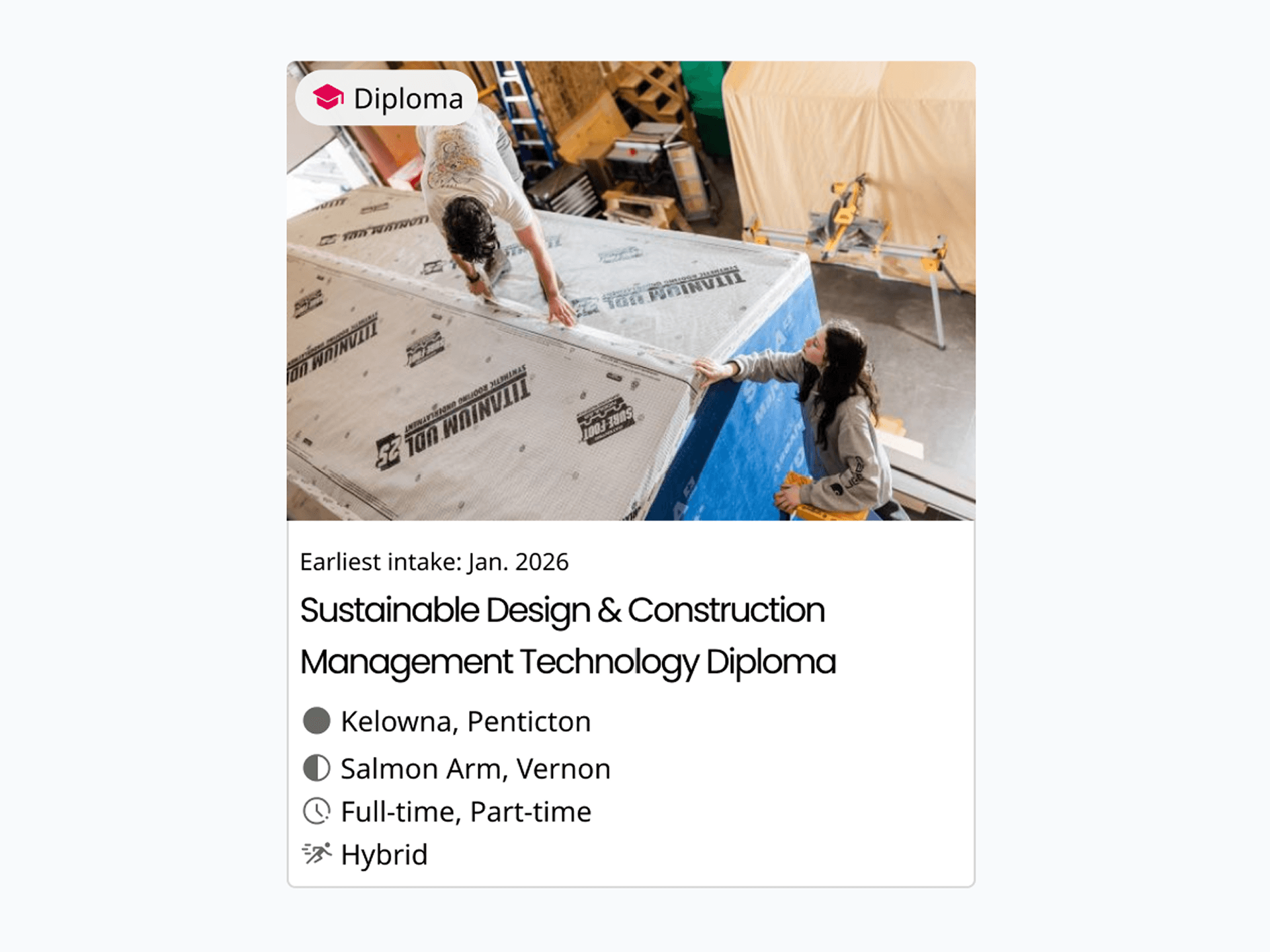
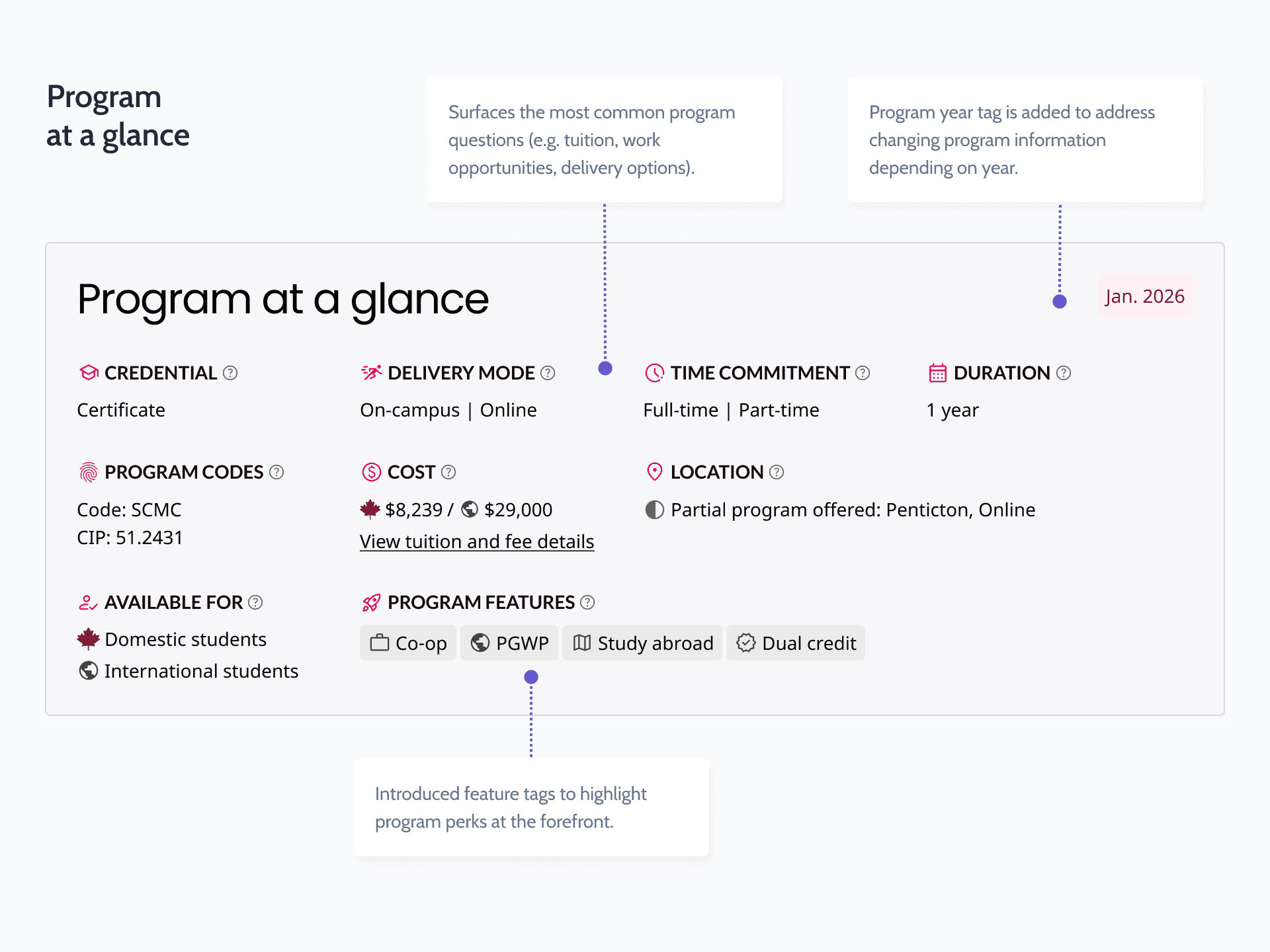
Program card:
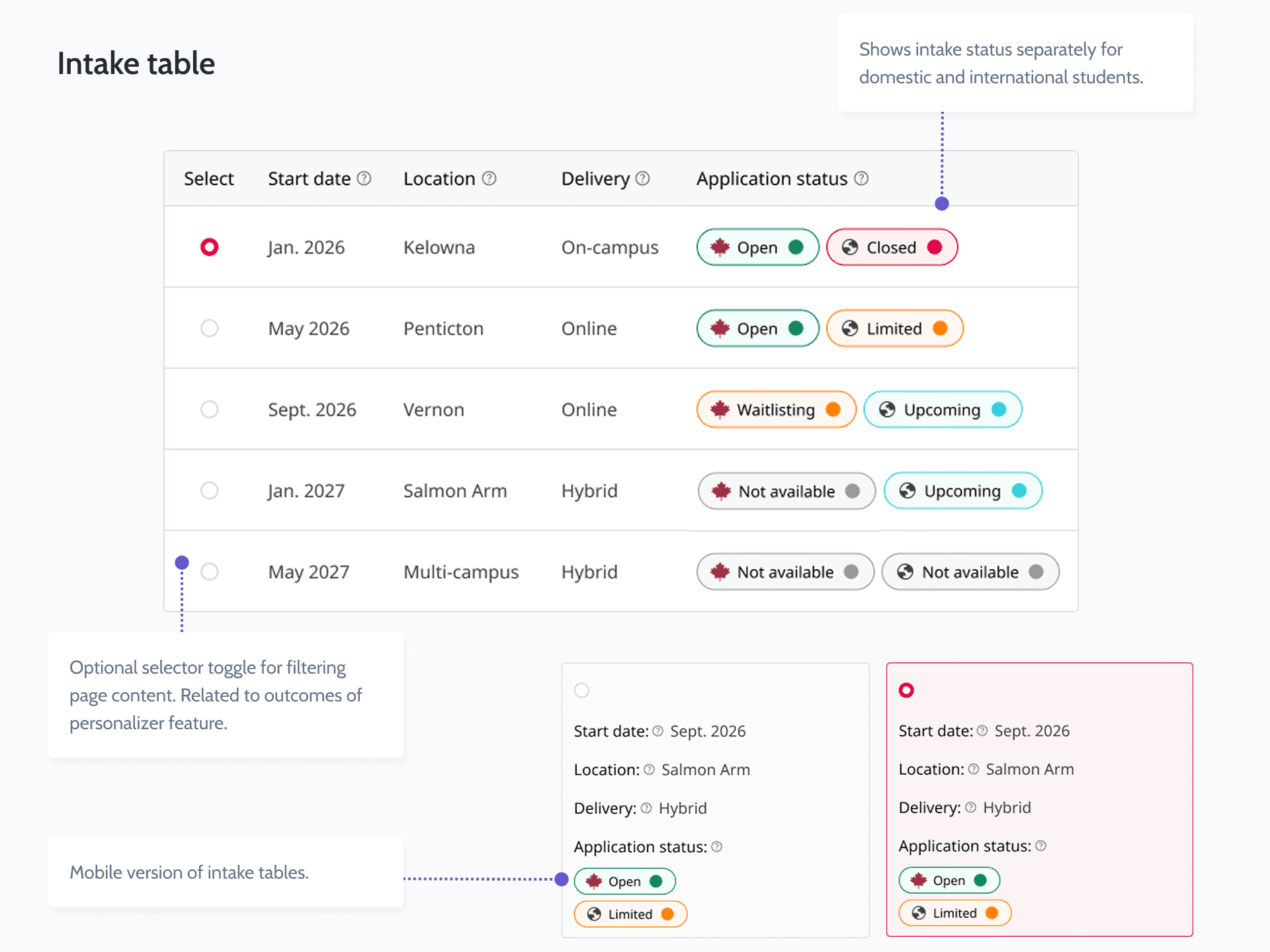
Configurable display options for location, time commitment, delivery, and intake availability,
MEASURING OUTCOMES
How will we know if these solutions worked?
My designs are currently being implemented by the development team and will be tested by a dedicated user testing group, the following are evaluated for impact:
🎟️Support tickets: Track the volume and types of support requests (IT and education advising) to identify areas that need refinement.
🔁Conversion: Determine if users are applying after being in the page.
🧐Feature usage: Measure how often new features are being used and what they are used for.
REFLECTIONS
Key takeaways
Tradeoffs
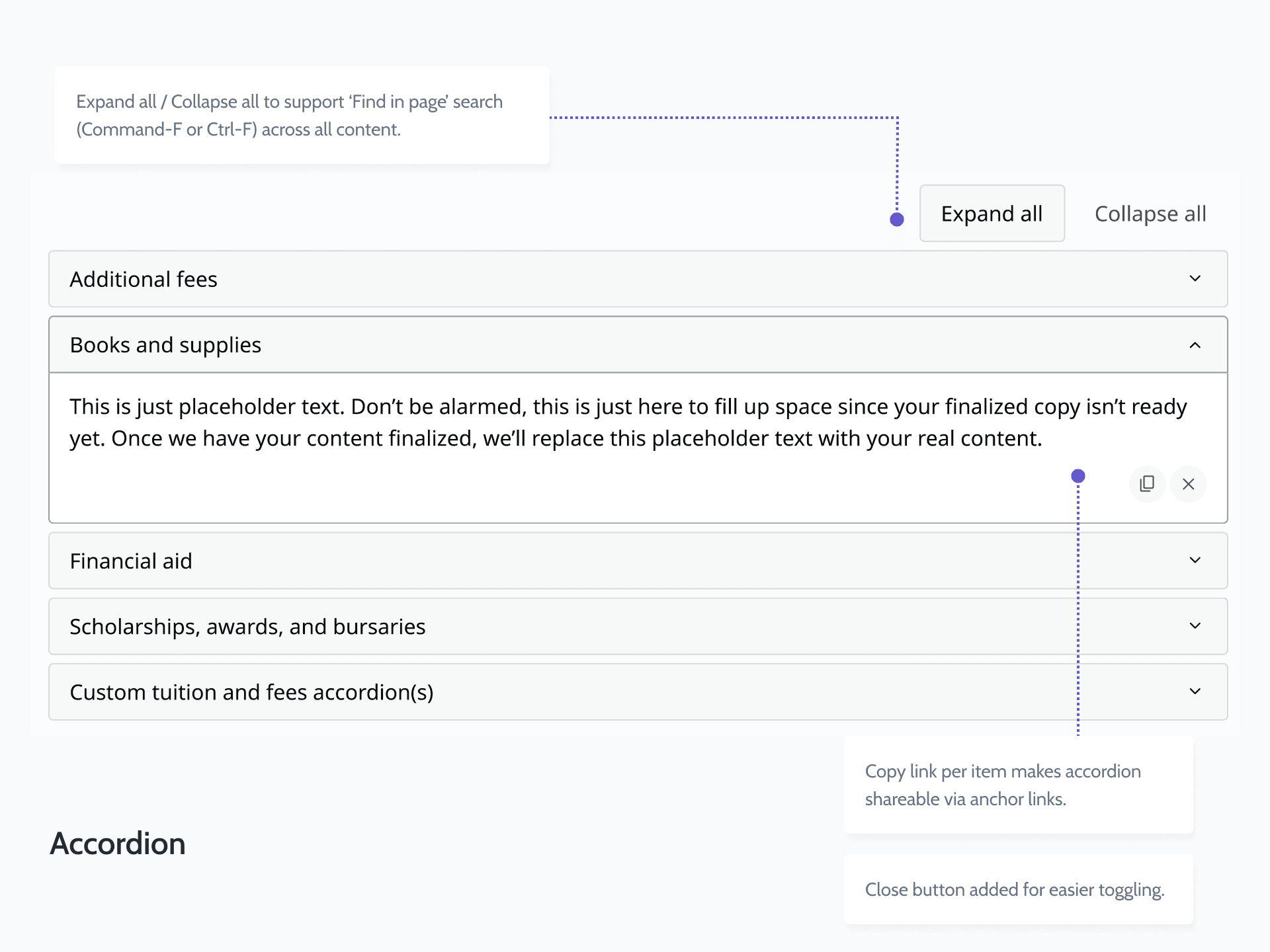
Accordion: Cannot add a copy link button because anchor links for accordions are not possible if they are under section tabs.
Personalizer: Unfortunately needed longer implementation time because of interactions between features (intake table selector, tuition breakdown, and sidebar).
What I learnt
🔨 Built a new design system: We are currently in the process of phasing out our older UI, during this project I helped build new components in our design system from the ground up.
🧠Strengthened product thinking: Working around different legacy systems and planning designs around rollouts, interactions, and edge-cases made me a more thoughtful designer.