MemoryLane
A resource hub for caretakers of those with dementia
Click to play preview.
Role
UX/UI Design Lead
Responsibilities
UX/UI Design
Wireframing & Prototyping
User Research
Usability Testing
Accessible Design
User Journey Mapping
User Flow
Team
UX/UI Design Lead
UX/UI Designer
Visual Designer
UX Researcher
Timeline
Jan. 2024 - Apr. 2024
OVERVIEW
A space for resources, advice, and comfort
MemoryLane addresses dementia caregivers' emotional and practical challenges, enhancing their ability to provide quality care while improving their own well-being.
EXPLORING THE PROBLEM
The care industry cannot keep up with the increasing rates of elderly population
Following the COVID-19 pandemic, the care industry has gained prominence, especially in the need of quality care for older adults. However the need for care has also been increasing at a rate the care industry can’t keep up with.
GATHERING INSIGHTS
Shifting our research to stay aligned with objectives
The very beginning stages of our research targeted individuals with dementia, ethical considerations led us to refocus on caregivers. Through interviews and secondary research, we identified three critical pain points:

PAIN POINT #1
Difficulty finding reliable information
"Research I find changes so fast, I have no idea where to find information. One day something is recommended, and the next day I find out it’s harmful." (Interview Participant 1)

PAIN POINT #2
Challenges applying learned information
"Caregivers reported difficulty finding and applying for resources and assessing the quality of the care, suggesting the need for a 'one-stop shopping' model." (White et al., 2018)

PAIN POINT #3
Caregivers need social support from those who have similar experiences
“When I speak with another caregiver, they instantly understand what I’m going through without needing much explanation.” (Interview Participant 2)
To further synthesize our findings, we encapsulated the problem we wish to solve for dementia caregivers into a question…
PROBLEM STATEMENT
How might we ease the trouble of finding resources for dementia caregivers while fostering emotional and social support?
RESEARCH BASED USER PERSONA
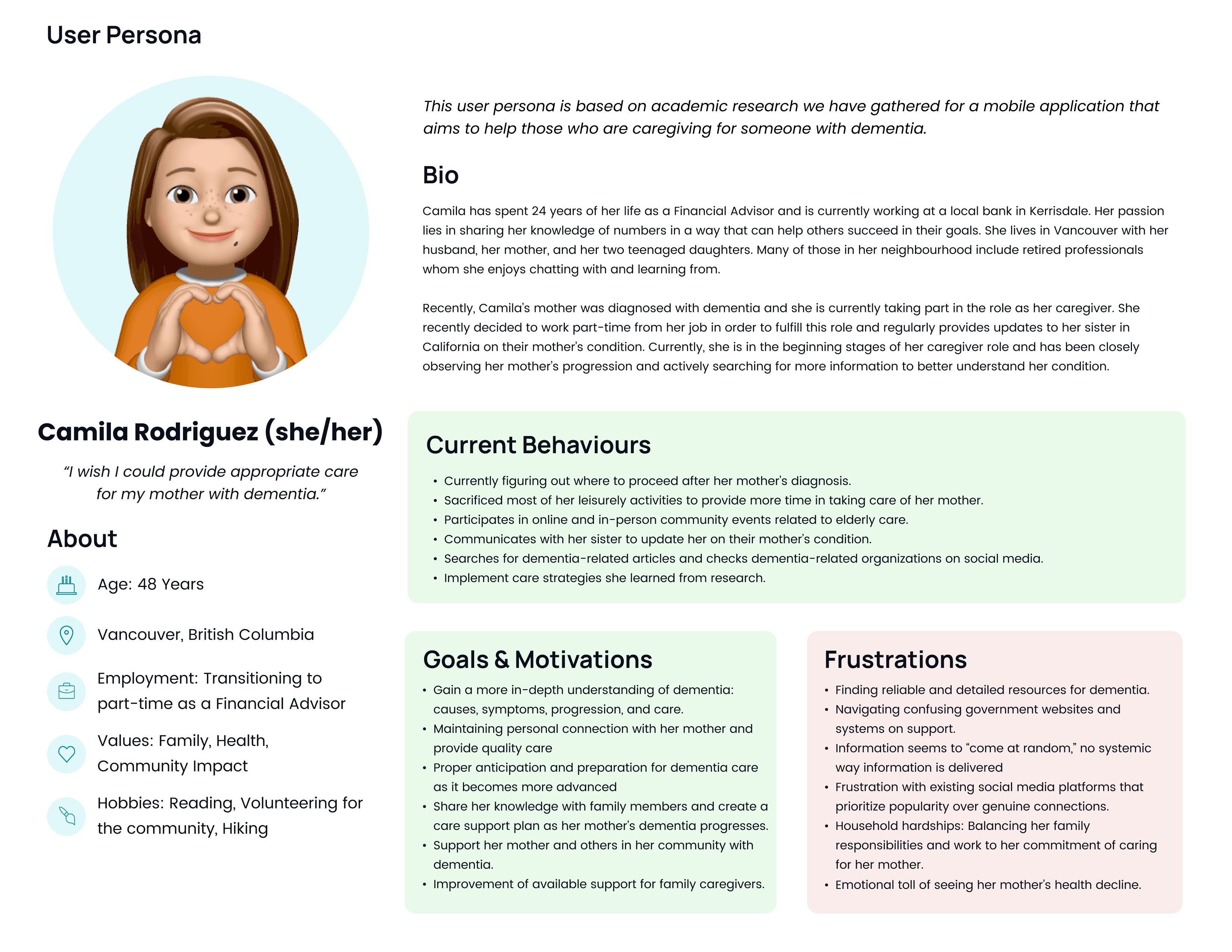
Introducing you to Camila!
PERSONA INSIGHTS
Through Camila we synthesized pain points we can focus on such as:
Navigating resources on dementia
Understanding dementia and its progression
Lack of support networks for caregivers
USER JOURNEY MAP
Determining how to help our users
A journey map illustrated Camila’s process when seeking resources for her mother. Through this, we found that the state of needing to find information and analyzing the information is the most troubling for our users. This helped us determine what types of features to make a higher priority or emphasize when ideating our solution.
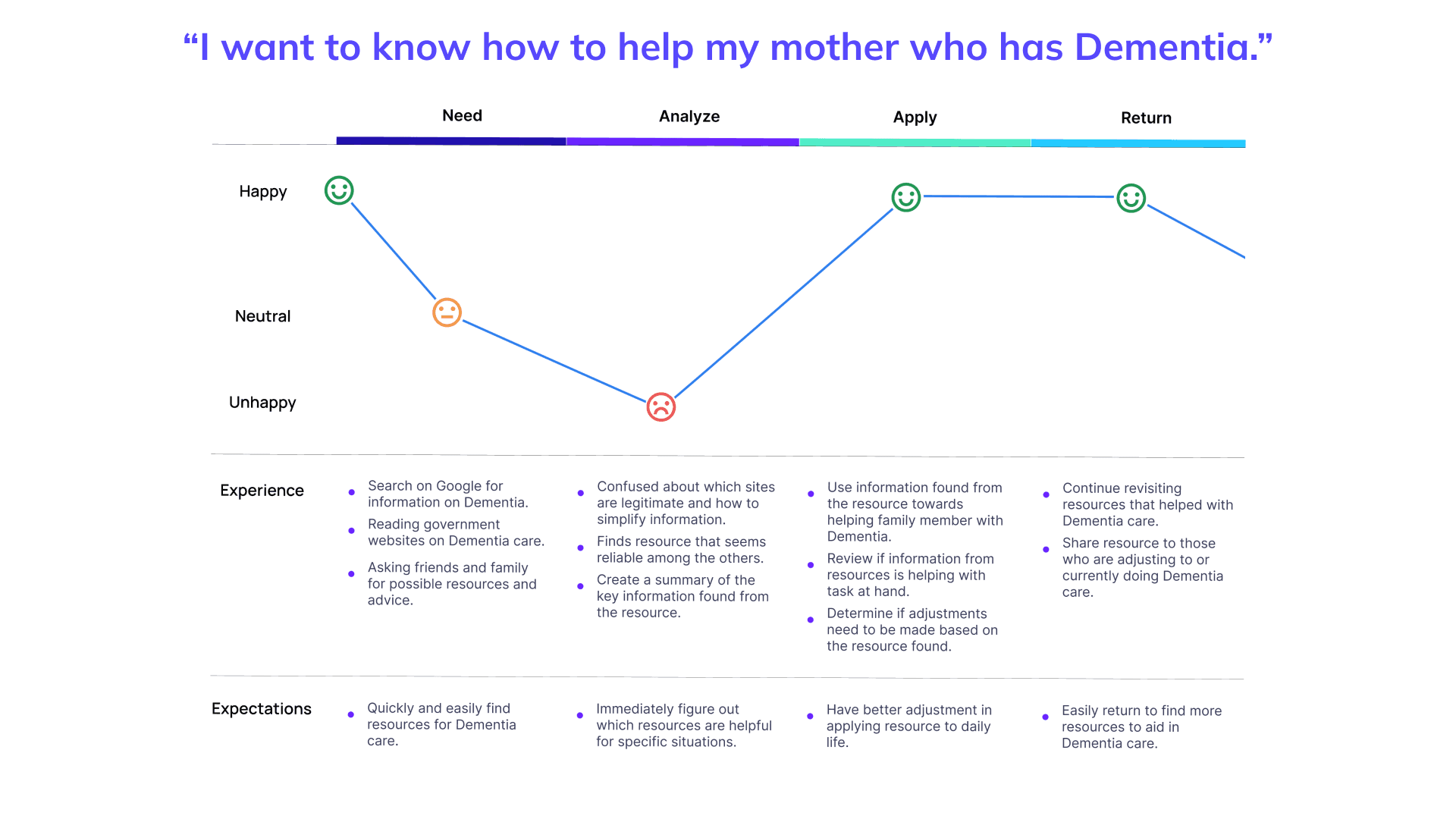
View the user journey map in detail (Click here).
😵😵😵
At this stage of the design process…
we started to getting a bit lost
The team knew what the problem was that we needed to solve, but what else can we create that that can also foster emotional and social support for our users.
IDEATION
Translating user needs into solutions
How might we ease the trouble of finding resources for dementia caregivers while fostering emotional and social support?
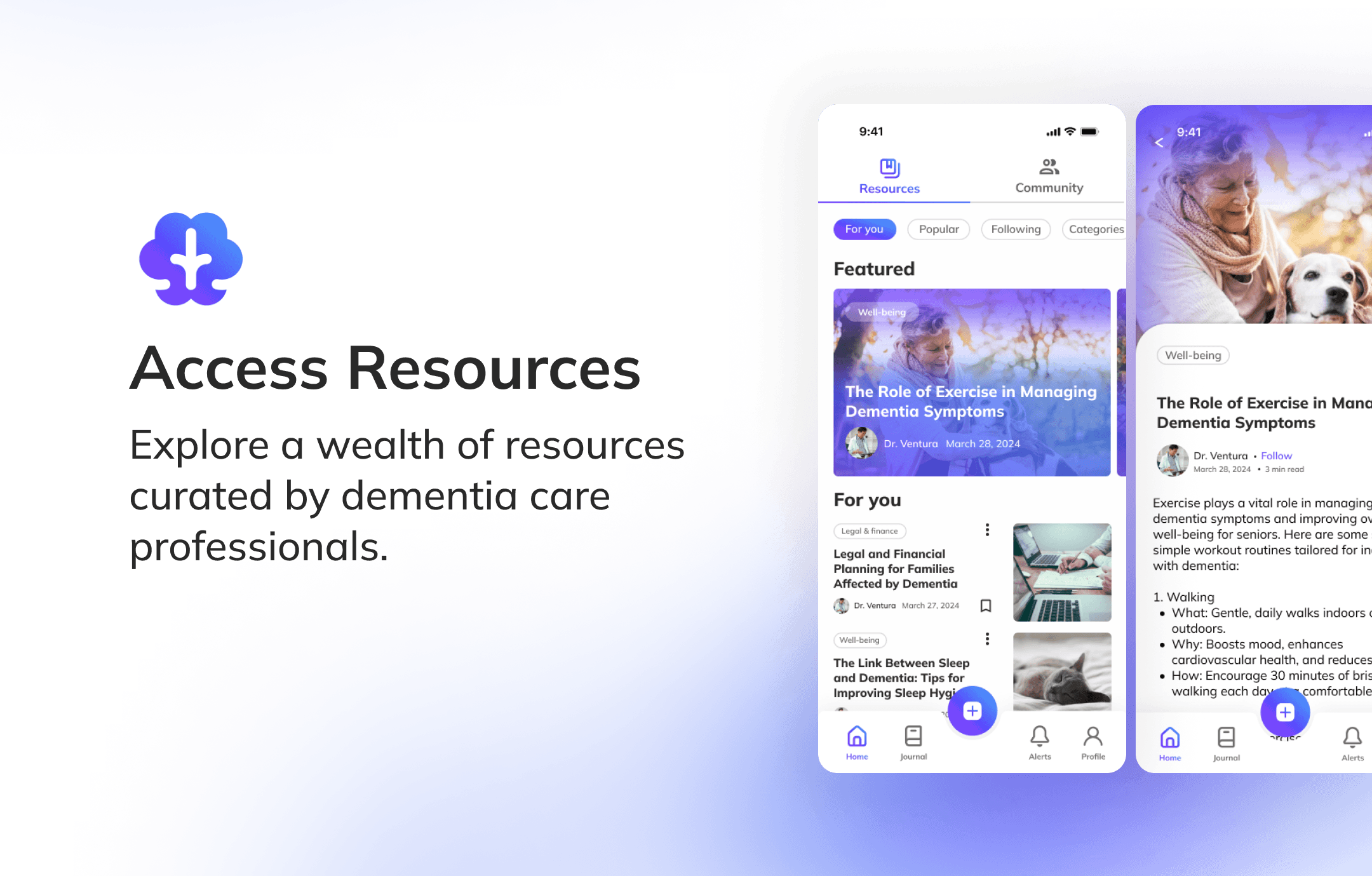
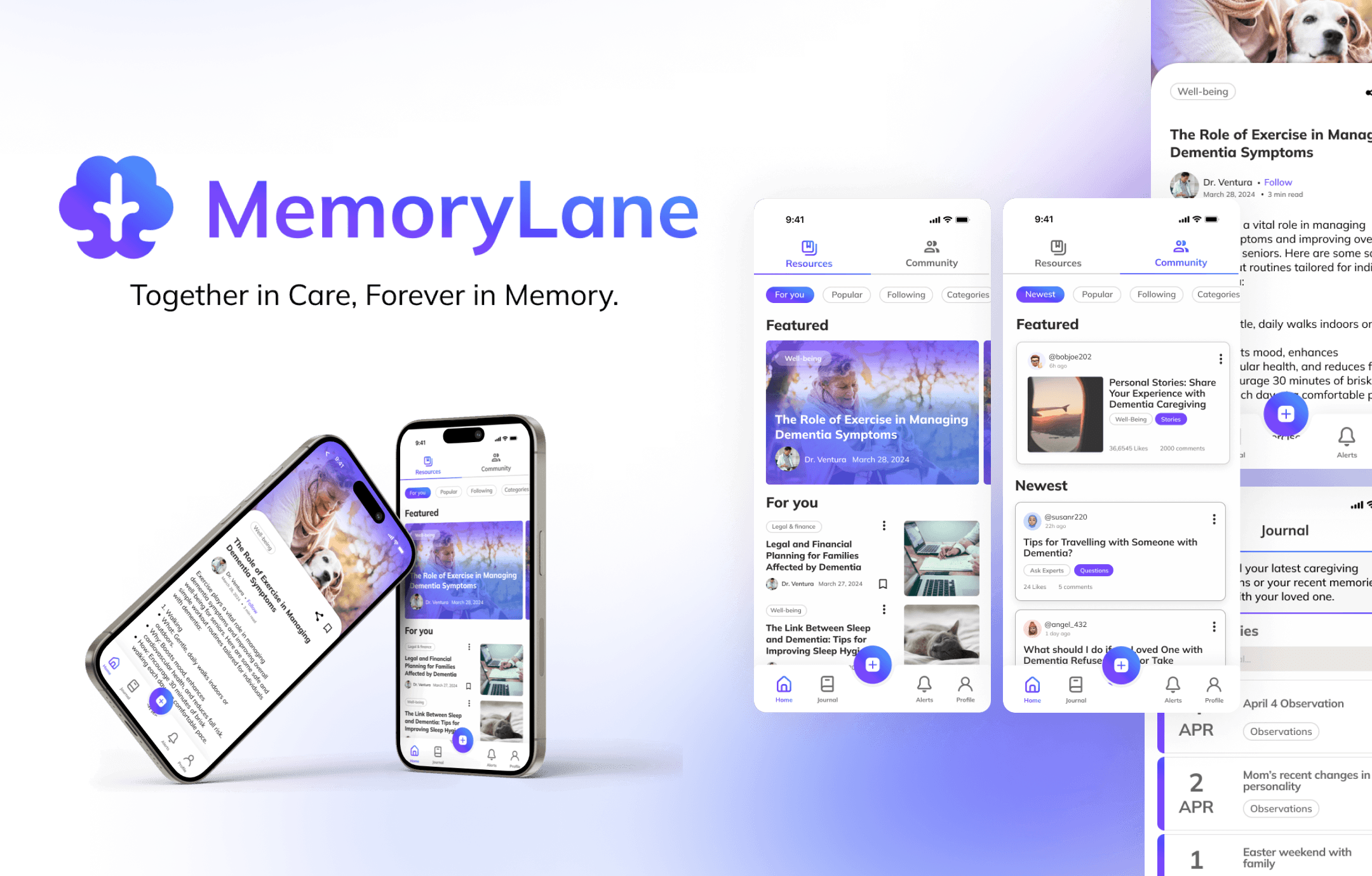
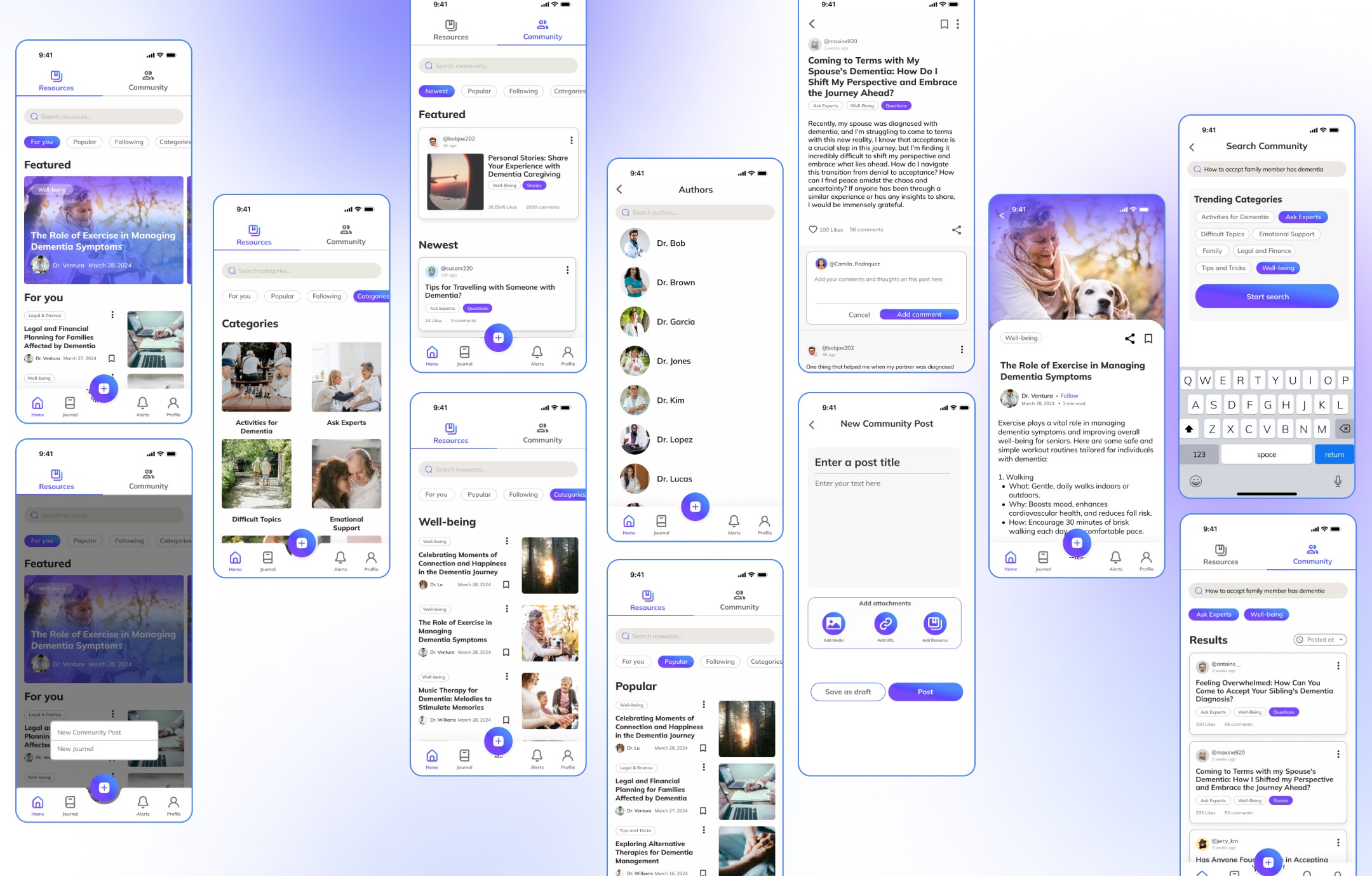
Centralized Resource Hub: Professional-approved place for resources.
Expert Insights: Follow trusted dementia professionals for updates.
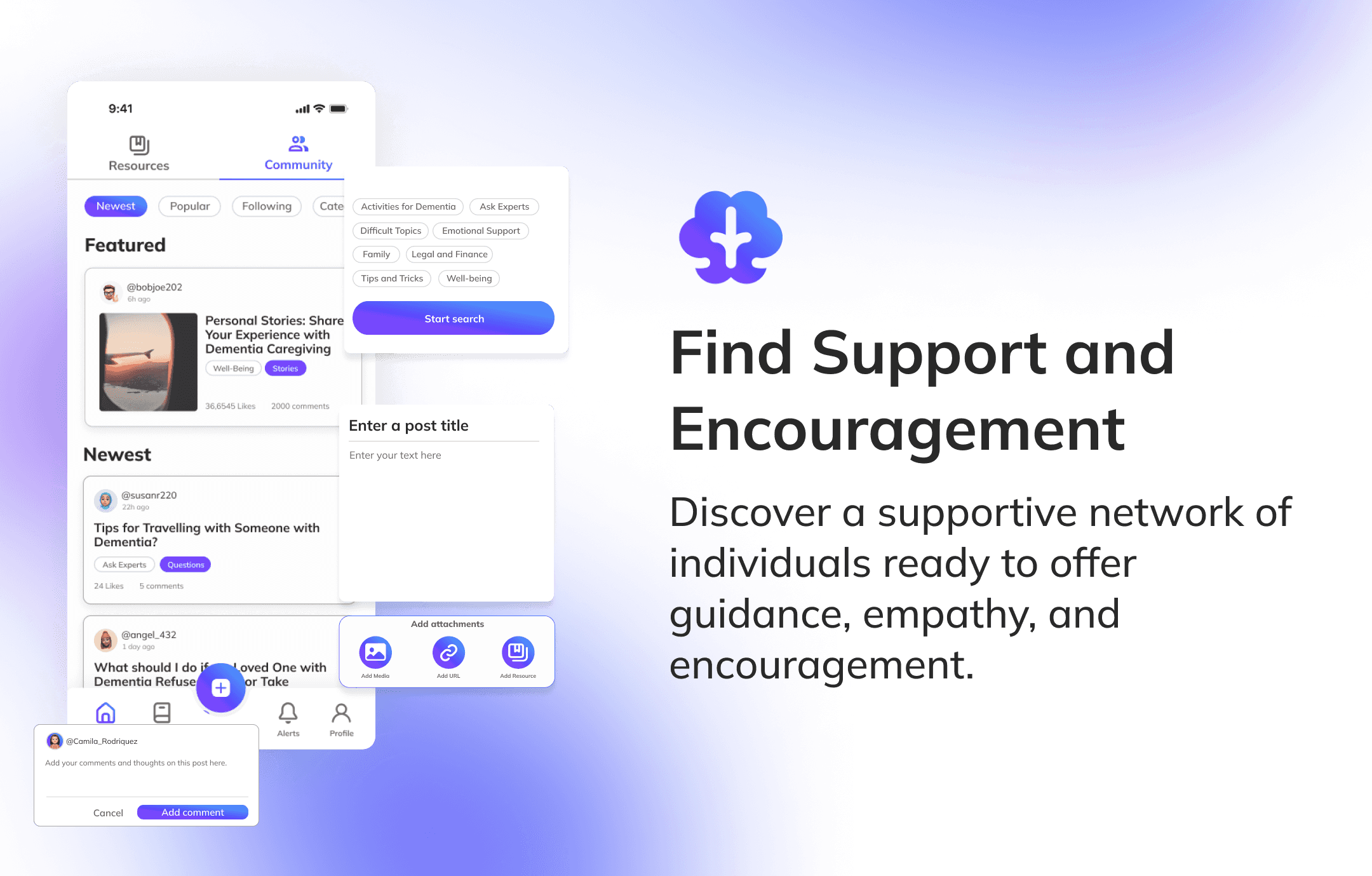
Community Forum: Peer-to-peer support for shared experiences.
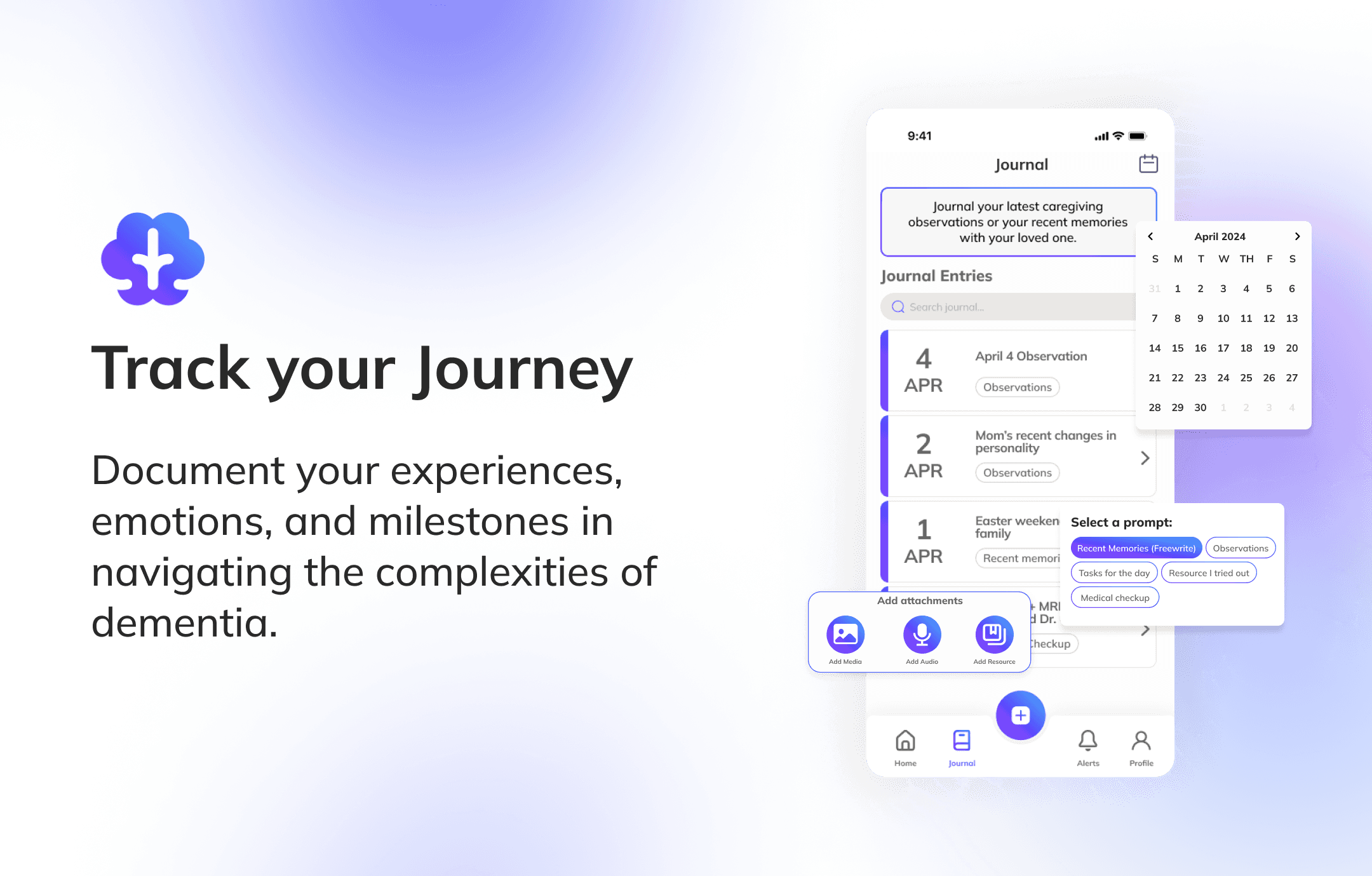
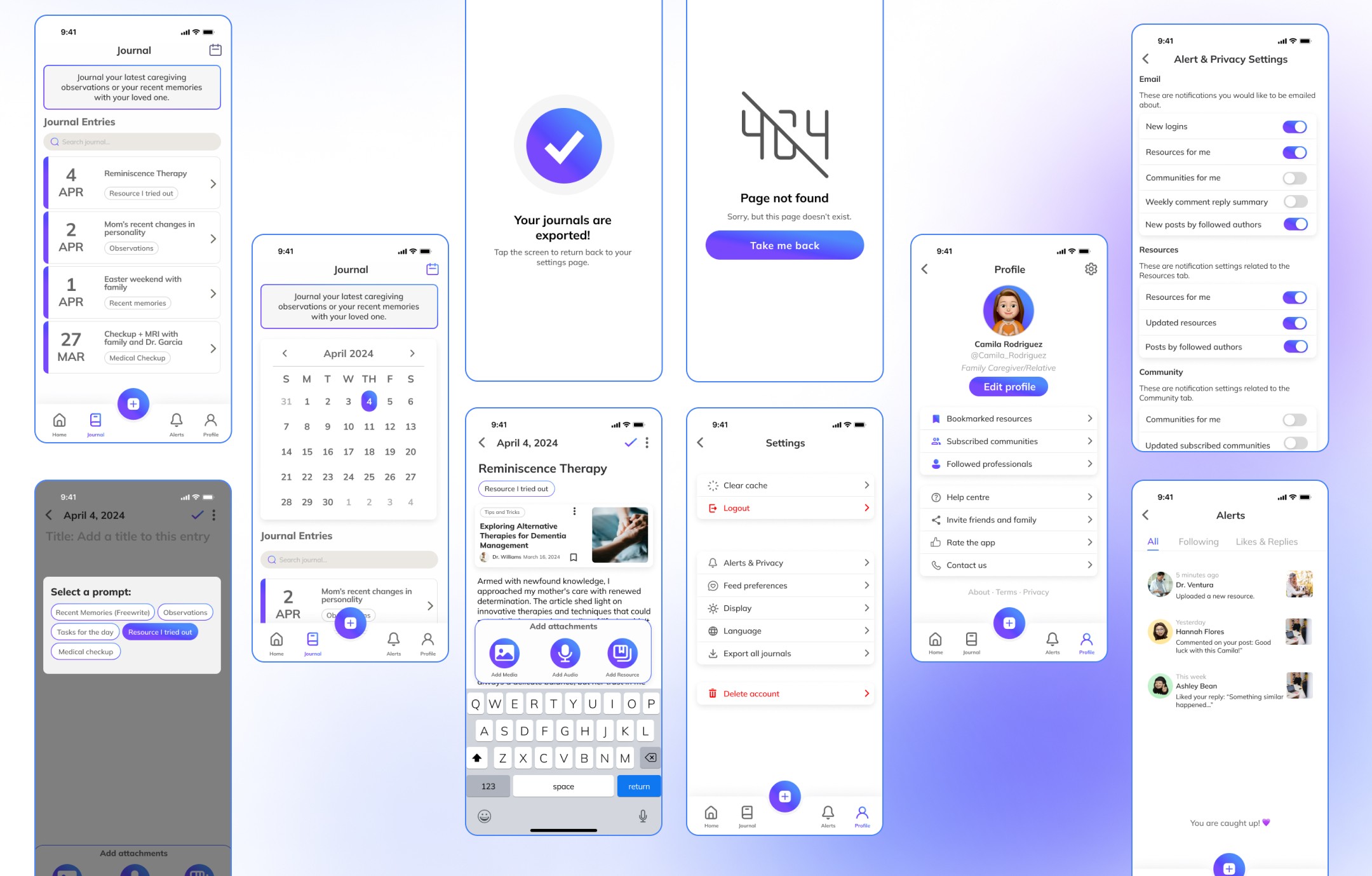
Memory Journal: Track personal caregiving journeys and milestones could foster mental ease.
USABILITY TESTING
Improving for ease and accessibility
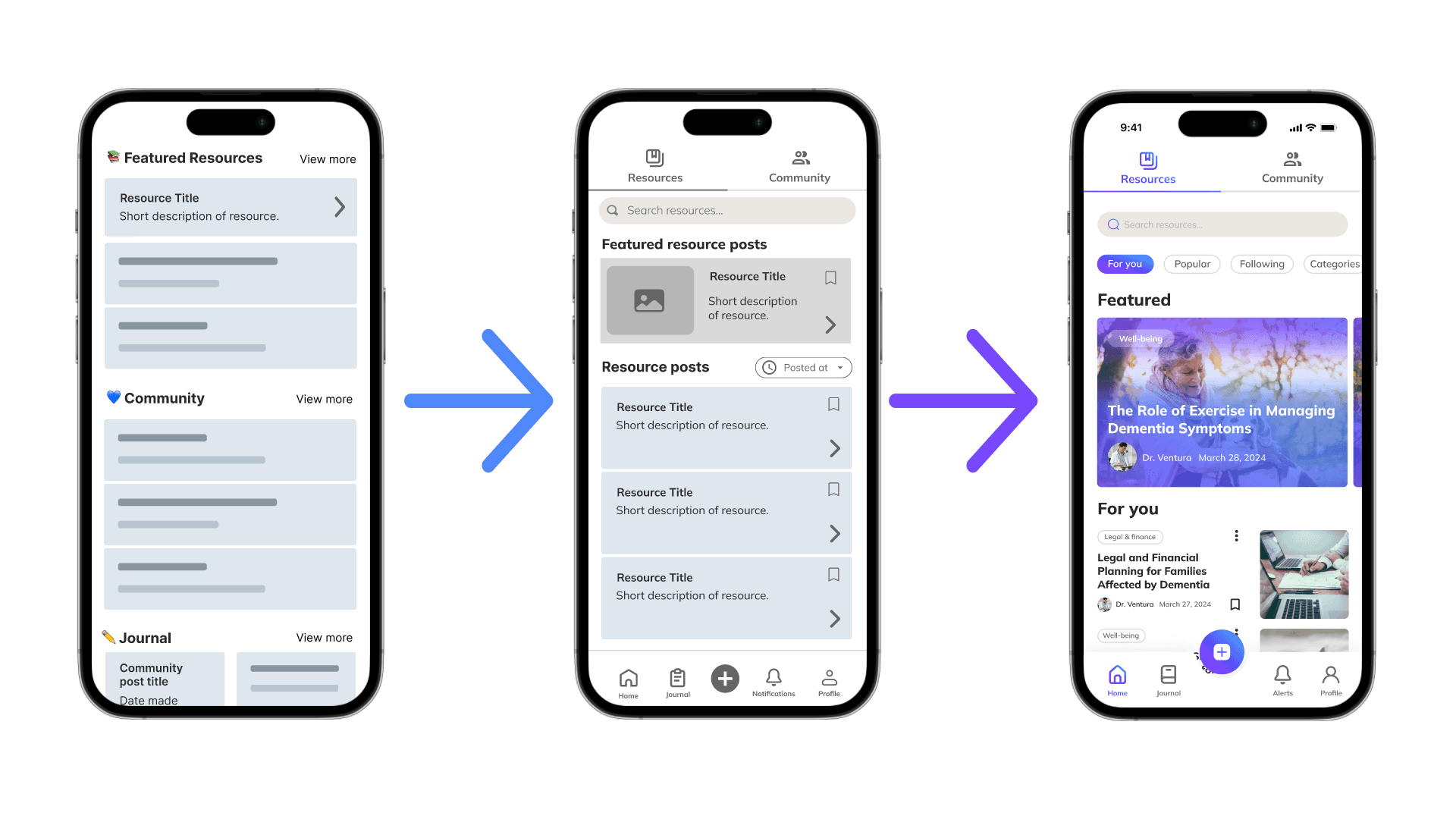
FEEDBACK #1: MULTIPLE VERTICAL AND HORIZONTAL SCROLLS ARE CONFUSING
"I didn't know each category was possible to scroll through until it was pointed out at the end."
Solution: Scroll features are simplified into vertical scroll.
FEEDBACK #2: HIGHLIGHT BOOKMARKING FEATURES
"I like being able to save resources I use often. Otherwise, I’m searching for everything all over again."
Solution: Added a more prominent “Save” feature for quick access for important resources.
FEEDBACK #3: REMEMBER USER ACCESSIBILITY
"I have bigger thumbs and bad eyesight, so I would appreciate bigger images so I can identify information quickly."
Solution: Implement more thumb friendliness and contrast.
USER FLOW
Mapping out the prototype
As we advanced further in the design process, my team and I started having troubles visualizing how interactions for features would take place seamlessly and what pages to make. To navigate against this blocker, a user flow has been created to act as a guide for us to minimize future confusion as the product development progresses.
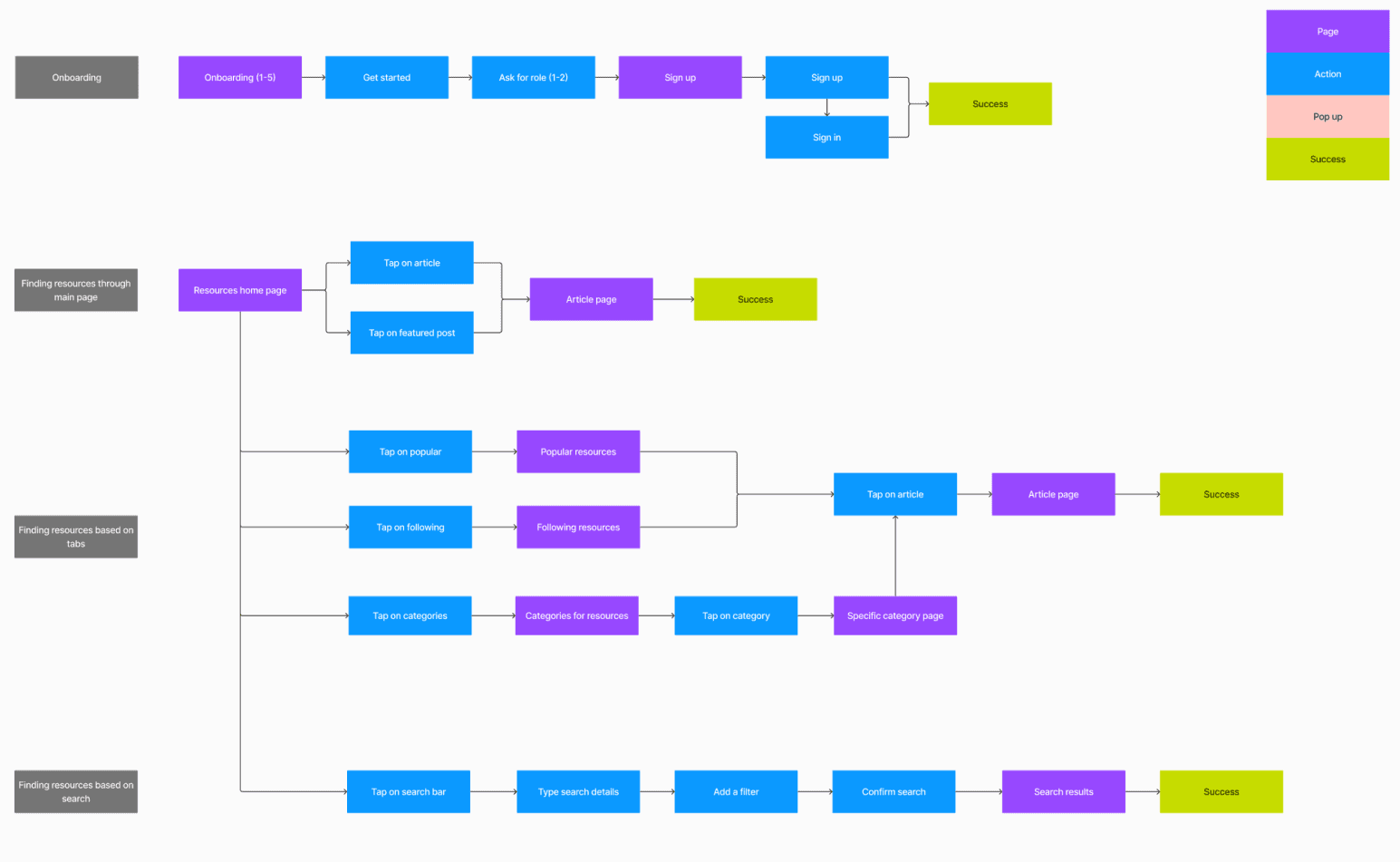
Check out the whole user flow (Click here).
DESIGN SYSTEM
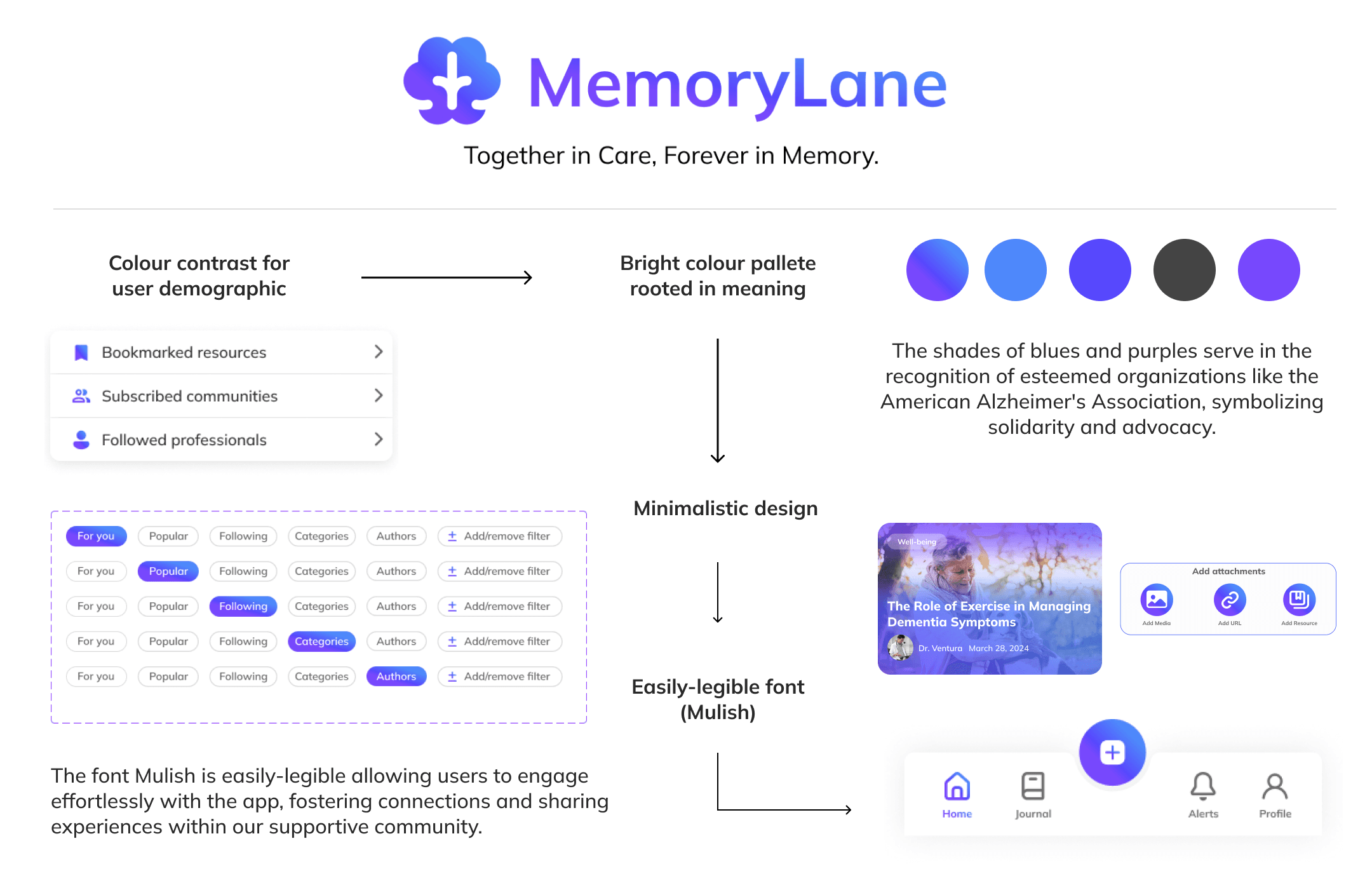
A homage to the Alzheimer's and dementia community
HIGH FIDELITY PROTOTYPE
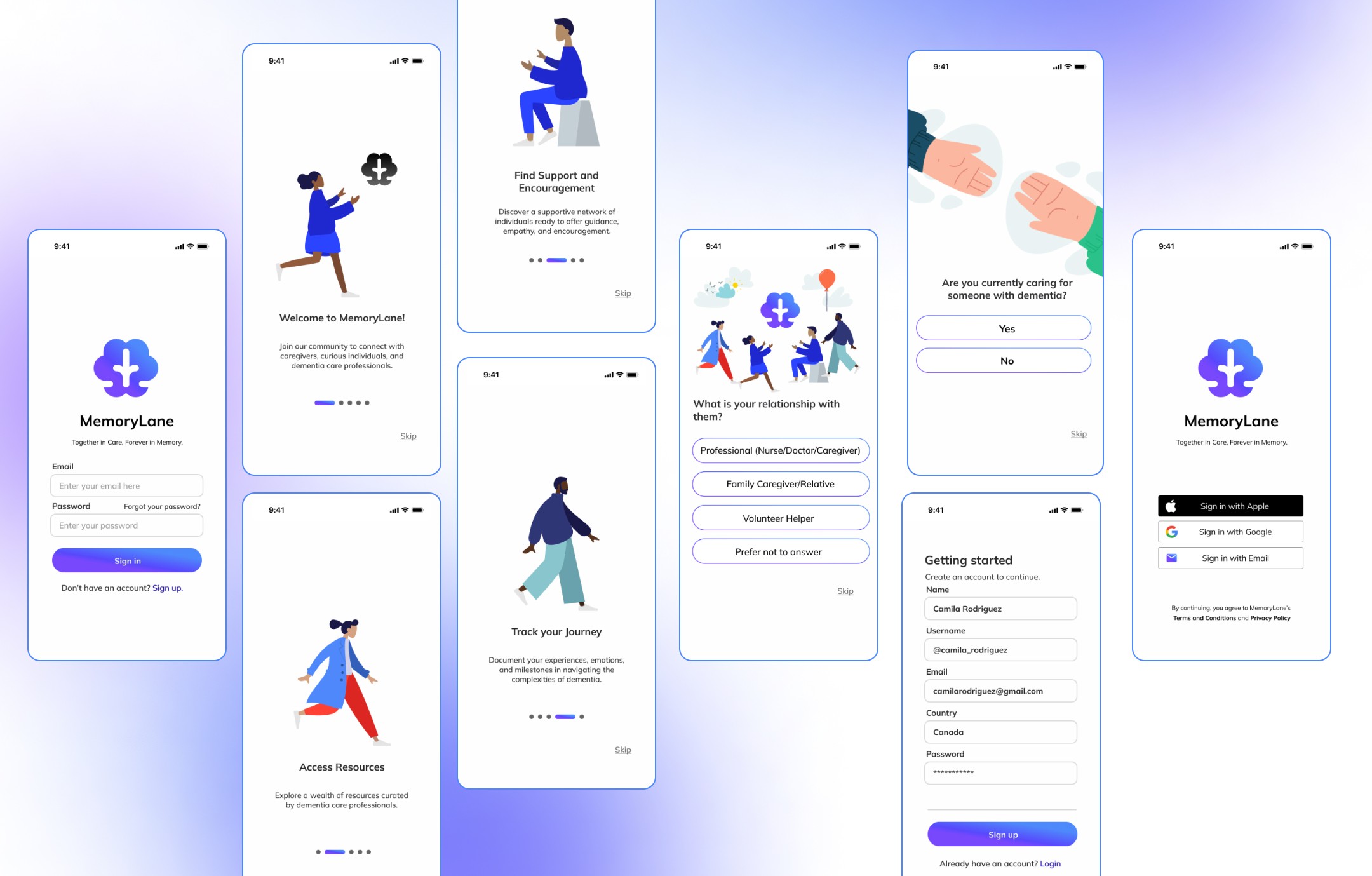
MemoryLane - for caretakers of those with dementia
IMPACT
What were the results?
Improved efficiency
Caregivers interviewed and usability test participants share that they would find resources faster using MemoryLane compared to traditional methods.
Aligned to what users are looking for
Usability testing revealed 80% of users valued the bookmarking and journaling features.
Positive user sentiment
60% of usability test participants felt “more supported" using a forum feature on a platform like MemoryLane compared to other existing social network platforms.